Why Ko vs Claude or Copilot
One question keeps coming up from customers: "Why would I use Ko when I can just use Claude?" It is fair to ask. You may already pay for a frontier model, or run Microsoft Copilot, and they seem to answer your energy market questions.
The short answer: Claude and Copilot are strong general reasoners, but on their own they hold no Modo Energy data. Ask for a specific BESS revenue benchmark and they may guess. Ko and the Modo Energy MCP both fix that. They ground answers in Modo Energy's regulated benchmarks, bankable forecasts, and expert research, and they cite every answer.
Key takeaways
- Claude and Copilot alone have no Modo Energy data. They were not trained on our benchmarks, forecasts, or proprietary data, so they cannot answer specific market questions reliably.
- Ko is the full Modo Energy experience. It is the AI analyst built into the Terminal, with the charts, tables, and interface designed around energy market analysis.
- The MCP brings Modo Energy into your own tool. It connects our data and research to Claude, Copilot, or ChatGPT, so your assistant reasons over trusted numbers.
- Ko and the Modo Energy MCP both cite their sources. Every answer is grounded in Modo Energy data, with the underlying source attached, so you can check the working.
Three ways to ask an energy market question
Start by separating the options, because they are easy to blur.
Ko in the Terminal. Ko is Modo Energy's AI analyst, built into the Terminal. It works alongside the charts, tables, and index pages, and it draws directly on our data and research. This is the best place to explore and visualise.
The Modo Energy MCP. The MCP is a connector. It plugs Modo Energy's data and research into the AI tool you already use, so your own assistant calls our numbers mid-conversation. You stay in your environment and keep your own context.
Claude or Copilot on their own. A general model learns from the public internet up to a cutoff date. It reasons well, but it has no connection to Modo Energy. On market specifics, it works from memory and guesses.
So the real contrast is a general model alone versus the same intelligence grounded in Modo Energy data.
| Ko in the Terminal | Modo Energy MCP | Claude or Copilot alone | |
|---|---|---|---|
| Modo Energy data | Yes, full access | Yes, read-only | None |
| Where you work | The Terminal | Your AI tool | Your AI tool |
| Reasoning | Ko | The model | The model |
| Sources cited | Every answer | Every answer | Rarely |
| Live data | Yes | Yes | No |
| Modo Energy charts | Yes | Some | No |
| Best for | Power market analysis and investment decisions | Modo Energy data inside your own workflow | General questions |
A general model was never trained on our data
Modo Energy's regulated benchmarks, asset-level revenues, and bankable forecasts are not in any frontier model's training set. Much of that data sits behind a subscription, and it updates daily.
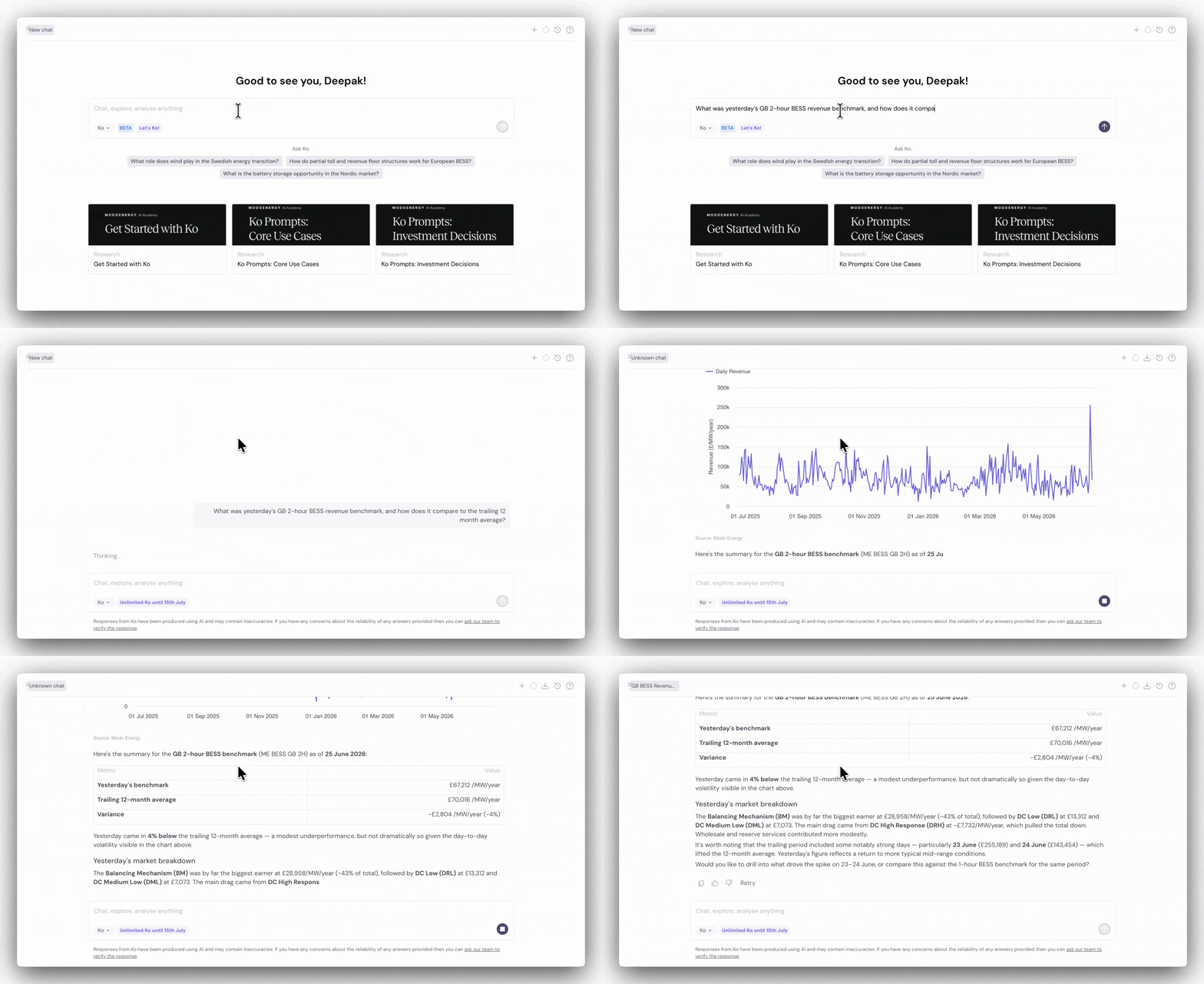
Ask Claude or Copilot for yesterday’s GB 2-hour BESS revenue, and it cannot know. It will either refuse or produce a plausible-looking number with no basis. Ko and the MCP query the live data instead. The answer reflects what actually happened, for the exact period you asked about.
Here’s a sample query tested on both Ko and Claude:
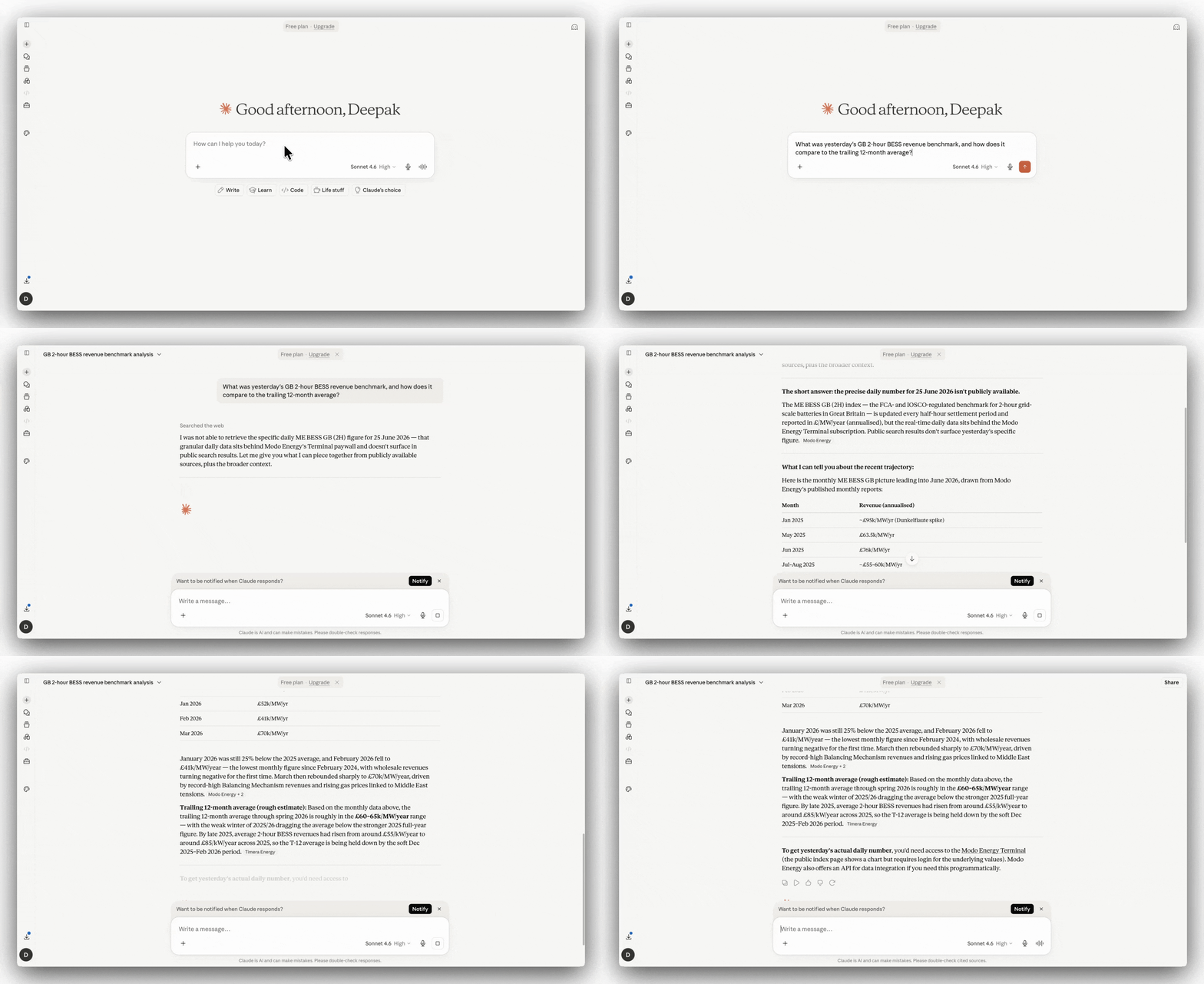
Full Claude response here.
It speaks the language of the market
"FCAS", "TB spread", "cannibalisation", "load zone": these terms carry precise meaning in power markets. A general model often blurs them, mixes up regional conventions, or invents definitions.
Modo Energy's intelligence is built on our glossary, dataset annotations, and metadata. It knows a TB spread is quoted in $/MW-day. It knows ERCOT has load zones and Great Britain has settlement periods. As a result, you avoid the subtle errors that only an expert would otherwise catch.
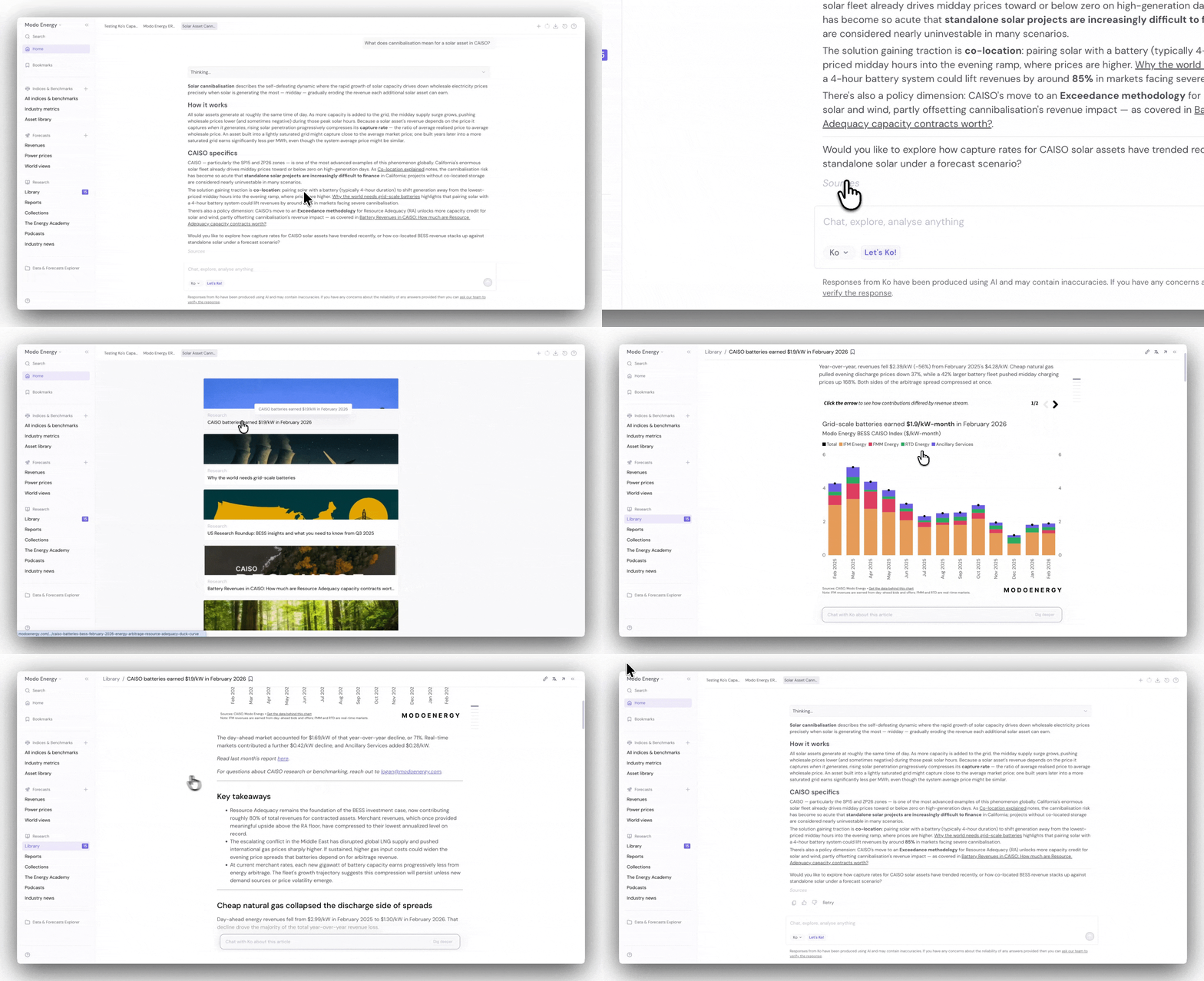
Here’s a quick comparison asking Ko and Claude about cannibalisation for a solar asset in CAISO:


Full Claude result here.
Curated research vs the open web
Ask a general model about an energy topic and it pulls from whatever it absorbed online: outdated blogs, press releases, and forum posts of unknown quality.
Modo Energy draws on research curated by power market experts. You get analysis from people who model these markets daily, not a synthesis of the open internet.
Why does citing sources matter so much?
A number you cannot trace is a number you cannot use. No analyst puts an unsourced figure into an investment committee memo.
Ko and the MCP show the Modo Energy data and research behind every answer. You can open the source and check it. General models rarely cite their working, and when they do, the link often points to the open web or to nothing at all. For investment-grade decisions, traceability is the difference between insight and liability.
Ko or the MCP: which should you use?
Both put the same grounded data at your fingertips. The choice is about where you want to work.
Use Ko when you want the full Modo Energy workspace: to explore, visualize, and dig into the markets directly.
Use the MCP when you want Modo Energy inside the workflow you already run: alongside your own model, your spreadsheet, or the documents in your assistant's context.
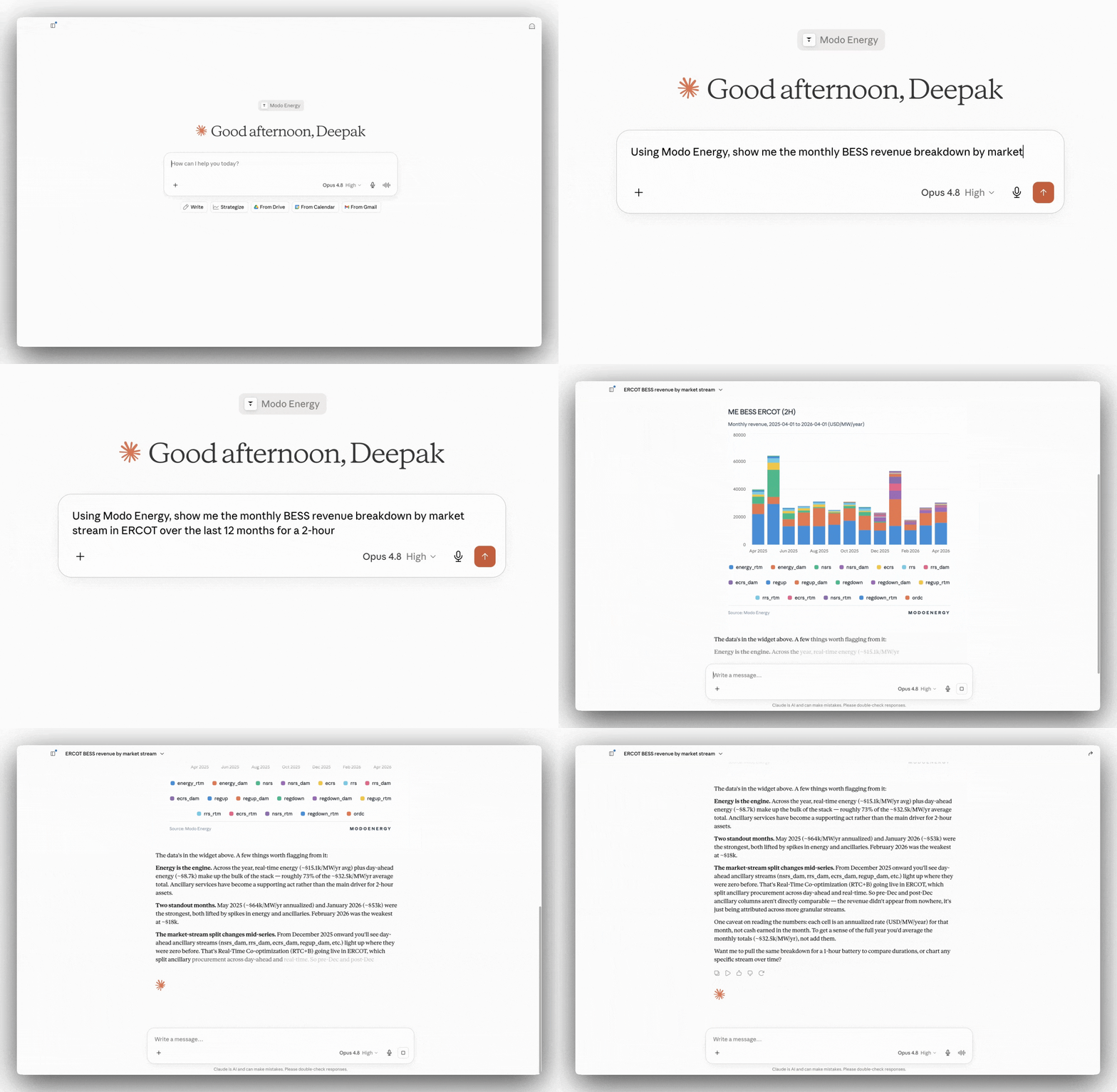
One habit helps once you connect the MCP. Name Modo Energy in your prompt: open with "Using Modo Energy, ...". That signals your assistant to call the server rather than answer from memory.
Here’s a sample query through the Ko MCP:
See it for yourself
The fastest way to settle the question is a side-by-side comparison. Like the example presented earlier, ask Claude or Copilot (without the Modo Energy MCP connection) a specific market question. Then ask Ko, or ask the same model with the MCP switched on.
When using AI for power market analysis or asset investment decisions, Modo Energy’s AI tools give you answers you can trust, backed by our trusted, proprietary data and our team of power market experts.
Related Articles
Get Started with Ko- set up and learn how to navigate Ko
Ko Prompts: Core Use Cases — prompts for exploring Ko’s core use cases
Ko Prompts: Investment Decisions — prompts for investment-grade, high-impact work.
Use Modo Energy in your own AI tools — bring Modo Energy data into the AI tools you already use.