Italy’s FCR pilot rewards early batteries, but the long-term upside is small
Italy’s FCR pilot rewards early batteries, but the long-term upside is small
Since 3 June 2026, Terna, Italy's transmission system operator, has paid for frequency containment reserve (FCR), the grid's first response to a frequency deviation, in an experimental pilot. The full market is due to open in 2028.
Before that, large plants had to provide a share of their capacity for free. They still do, but a paid market now runs alongside.
So far, the pilot has proved lucrative for batteries: a 4-hour battery could earn up to around 25% more revenue in 2026 compared with Modo’s vBESS index.
However, our projections suggest that the long-term revenue opportunity is limited. Just 33 MW are procured under the pilot, rising to around 330 MW when the full FCR market launches. With relatively little capacity required, the market is expected to saturate quickly as more assets compete for these revenues.
FCR is the first of the three services that keep the grid's frequency stable
Keeping the grid at 50 hertz is critical: large deviations can damage equipment or cause blackouts. Italy shares that frequency with the rest of Continental Europe.
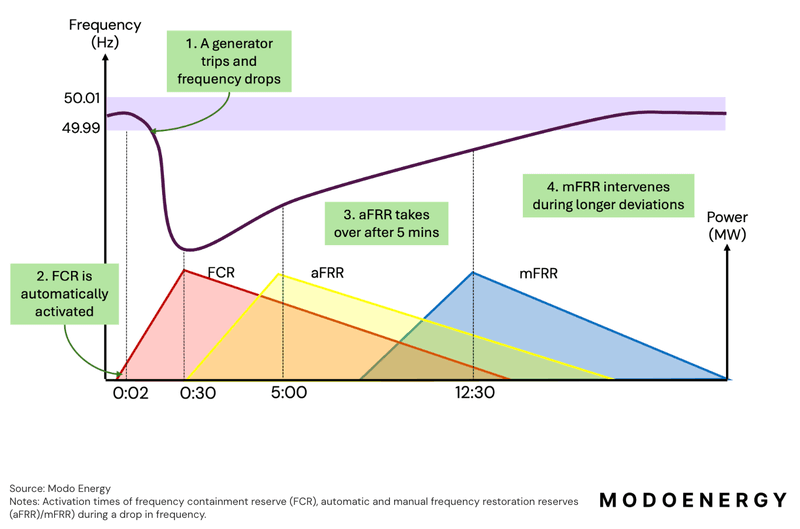
Although Italy packages these services in different markets, it relies on the same three building blocks.
- , frequency containment reserve: each unit reacts on its own to the frequency it measures, and must reach full power within 30 seconds at a deviation of 200 millihertz.
Sign up to read this article for free
Unlimited access to our free articles
Monthly access to 2 Global Research articles
Benchmarks, Forecasts, Ko and more