Should a Dutch BESS contract less import capacity?
TenneT’s grid charges took more than half of the revenue of a 2-hour Dutch BESS with a firm connection in the year to September 2026. On a full, firm connection at high voltage (HV), the battery earned €280k/MW/yr and, at 2026 tariffs, paid €148k of it to TenneT.
The bill is set by what the battery imports. A fixed charge of €66k/MW/yr applies to the import capacity the site contracts. A monthly charge of about €8k/MW applies to the highest weighted import peak. TenneT weights each quarter-hour’s import by when it happens. Import counts in full on weekdays between 08:00 and 22:00 from December to February, and between 17:00 and 21:00 in March, October and November. At noon on a weekday in June, the weight is 0.6.
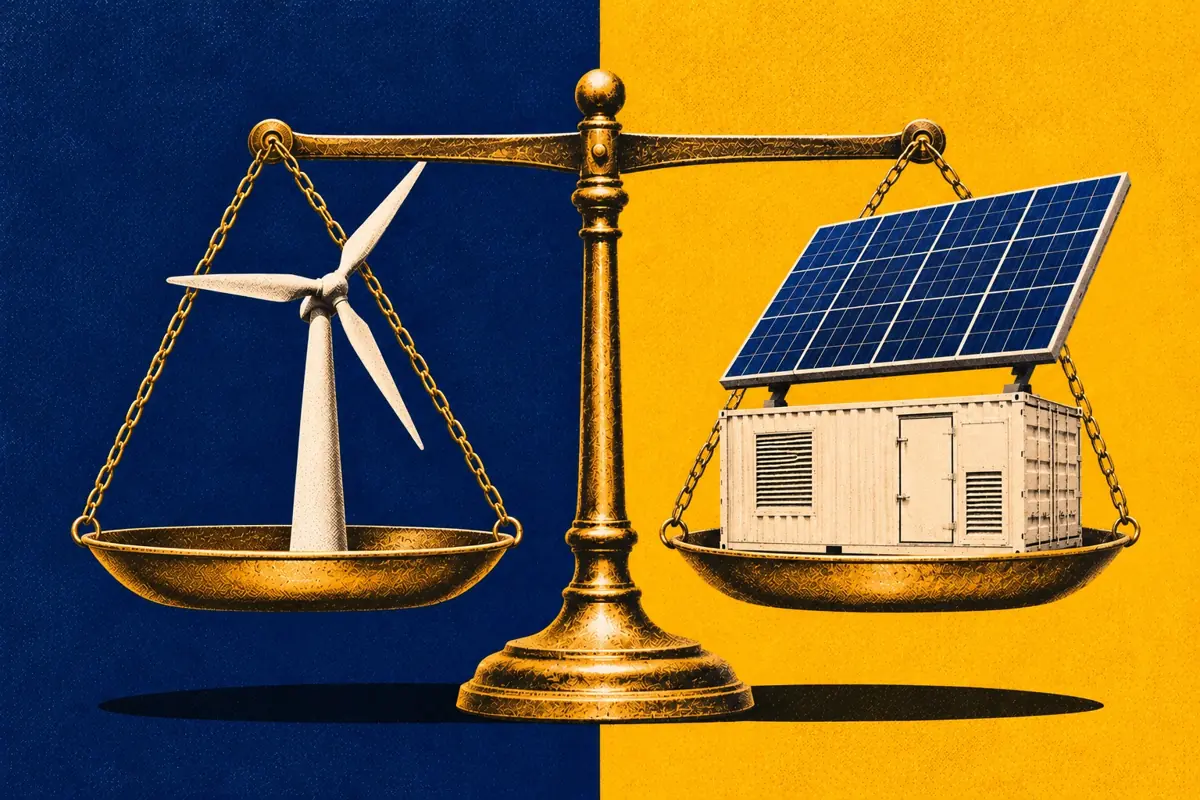
Contracting less import capacity reduces the bill, but the battery then charges more slowly and earns less. At HV, a 1-hour BESS earns its highest net revenue at 20% of its rated power; a 2-hour BESS at 30%, and a 4-hour one at 20% to 30%.
In an area congested by demand, every BESS earns a higher net revenue with a time-dependent transport right (TDTR), at its best import level, than on a firm connection of any size. TDTR is essentially a flexible grid connection. TenneT drops the contracted charge, and in return it can curtail the site for up to 15% of the year. On a full connection, TDTR adds €54k/MW/yr of net revenue to a 2-hour battery in an area congested by demand, after curtailment.
Key takeaways
- A smaller connection costs little revenue, because upward aFRR capacity needs little import. Cutting a 2-hour BESS’ import connection by half does not reduce its upward aFRR capacity revenue: it rises 13%, from €109k to €123k/MW/yr, as the battery moves capacity from downward to upward aFRR.
- A 4-hour BESS loses the most revenue from a smaller connection, because each MW of connection has more energy behind it: halving import costs it €40k/MW/yr of revenue, against €23k for a 2-hour one and €19k for a 1-hour one.
- Time-dependent transport right (TDTR) raises net revenue for every duration on a full connection at HV, because losing the contracted charge saves more than curtailment costs: by €54k to €57k/MW/yr in a demand zone, and €4k to €22k in a solar zone.
Why does every Dutch BESS gain from a smaller connection?
Each 10% cut saves the same amount for every battery, because TenneT charges per MW. What differs for each duration is the lost revenue per MW.
At HV, a full connection costs every battery about €148k/MW/yr, and all of it is set by import. That is 48% to 73% of its revenue in the year to September 2026, depending on duration. The last MWs of import earn far less than they cost, so every battery earns more net revenue on a smaller connection, at 20% to 30% of its rated power.
Sign up to read this article for free
Unlimited access to our free articles
Monthly access to 2 Global Research articles
Benchmarks, Forecasts, Ko and more