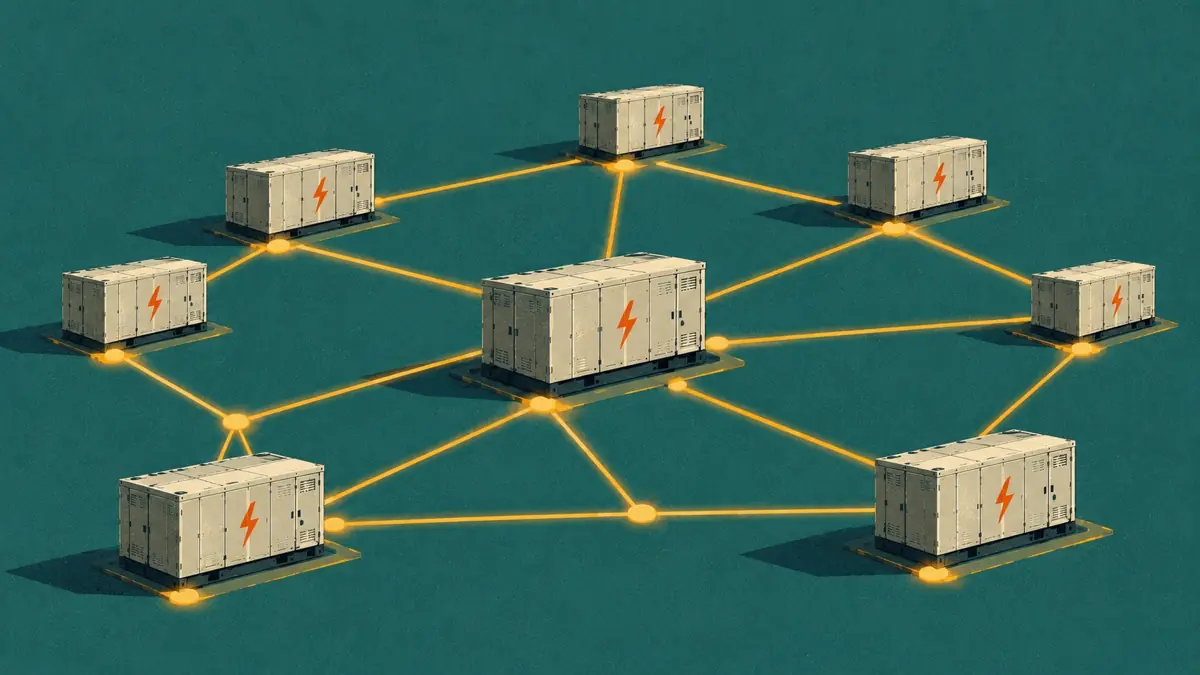
How the NEM ESEM Regional Reference PPA works
The Nelson Review's Electricity Services Entry Mechanism proposes a bulk energy contract for wind and solar projects called the Regional Reference PPA.
The contract would let a project sell a standardised share of regional renewable generation at a fixed price. The seller would receive the fixed price and pay the floating regional spot price on a notional volume set by a reference fleet. Its own generation and merchant revenue would remain outside the contract.
Financial settlement separates the contract from physical generation. The project continues operating in the merchant market, whilst the contract payoff depends on the output and capture price of similar projects in the same region.
In the example above, adding the contract produces less total revenue than merchant operation alone. The operator forgoes part of the merchant outcome in exchange for greater revenue certainty. The result will depend on the fixed price and the relationship between project revenue and the fleet-based settlement.
The ESEM Administrator would buy the long-term contract over the tenor gap required for project finance. As delivery approaches, it would sell shorter-dated standardised products to private buyers. The fleet index needs to make the contract tradeable whilst preserving enough value for project finance.
This article explains how the Regional Reference PPA settles, how the reference fleet determines the payoff and which definitions remain open. Part 2 will examine the value and risks for individual projects.
Executive summary
- Settlement is independent of the seller's generation. The contract exchanges a fixed price for the regional spot price on a notional volume set by the reference fleet.
- The contract can reduce revenue volatility without changing asset operation. An example wind farm recorded two-thirds lower month-to-month volatility under the contract than pure merchant.
- A fleet index creates one standardised product. Eligible projects use the same regional technology index, allowing the ESEM Administrator to warehouse and resell the contract.
- Several core design choices remain open, including fleet composition, marginal loss factors, new entrants, negative prices and spot-price exposure.
The contract reduces volatility for the illustrated wind farm
The contract payoff depends on the reference fleet's volume and capture price. Changes in the seller's own time-of-day generation profile do not alter the settlement.
When applied to the merchant revenue of the illustrated Victorian wind farm, the contract reduced month-to-month volatility by two-thirds between June 2022 and July 2026. In practice, it lowered total revenue during the highest merchant months and supported it when merchant returns were lower.
The Regional Reference PPA uses a fleet index to create one tradable product
Projects using the same technology and region would trade the same contract. The reference fleet sets the notional volume and floating price used for every eligible seller.
A common payoff improves fungibility. The ESEM Administrator can warehouse long-term contracts and resell shorter-dated products without pricing each asset separately. Lenders will still assess the project's total cash flows, including its merchant revenue and the fleet-based contract settlement.
The reference production index measures the fleet's dispatched generation against its maximum possible output. The seller's contract capacity is then scaled by that index for each settlement period.
Any difference between project revenue and fleet settlement remains in the seller's combined revenue position. Part 2 will quantify that basis and its effect on project value and financeability.
Capture prices vary within each region
Capture price is highly location-specific, even for projects using the same technology in the same region. Local weather, dispatch and network constraints change when each asset generates.
The map shows the range of project outcomes represented by one regional index. The Regional Reference PPA settles against the fleet capture price, whilst each project continues earning the capture price from its own generation. The difference remains with the seller.
The working group has not finalised which assets will form the reference fleet. Open questions include project eligibility, the base resource, marginal loss factors, treatment of new entrants and index governance.
Project-level volume differences remain with the seller
Fleet-wide generation determines the contracted volume, so the notional quantity rises and falls with output from the reference fleet. However, local resources, availability and constraints mean individual projects can still generate above or below that index.
The reference index reached 0.36 for the NEM wind fleet in windier quarters, whilst the solar index reached 0.24 and followed a stronger seasonal pattern. These fleet-level movements set the notional quantity for every eligible seller.
The contract design remains open for consultation
The Regional Reference PPA is still being developed. The central design task is to create a contract standard enough to trade whilst retaining enough value for project finance. Fleet composition, spot price exposure, negative-price treatment and the allocation of project-specific risks remain open.
The Electricity Contract Co-Design Working Group is seeking feedback until 2 October 2026. Stakeholders can respond through the consultation submission form.
Part 2 will examine how to value the contract for an individual project. It will measure basis risk across the wind and solar fleet, then test the effect of constraints, scarcity exposure, marginal loss factors, negative prices and changing fleet capture on financeability.