How does the new BELL process change large load connection in NYISO?
How does the new BELL process change large load connection in NYISO?
New generation, which includes battery energy storage, is required to receive firm grid service in the NYISO proposed large load process. Qualifying loads, defined as commercial or industrial sites with peak demand of 50 MW or more on New York's bulk grid, must apply. These sites are referred to as Bulk Electric Large Loads (BELLs). Exclusions cover uninterruptible uses such as hospitals and critical infrastructure.
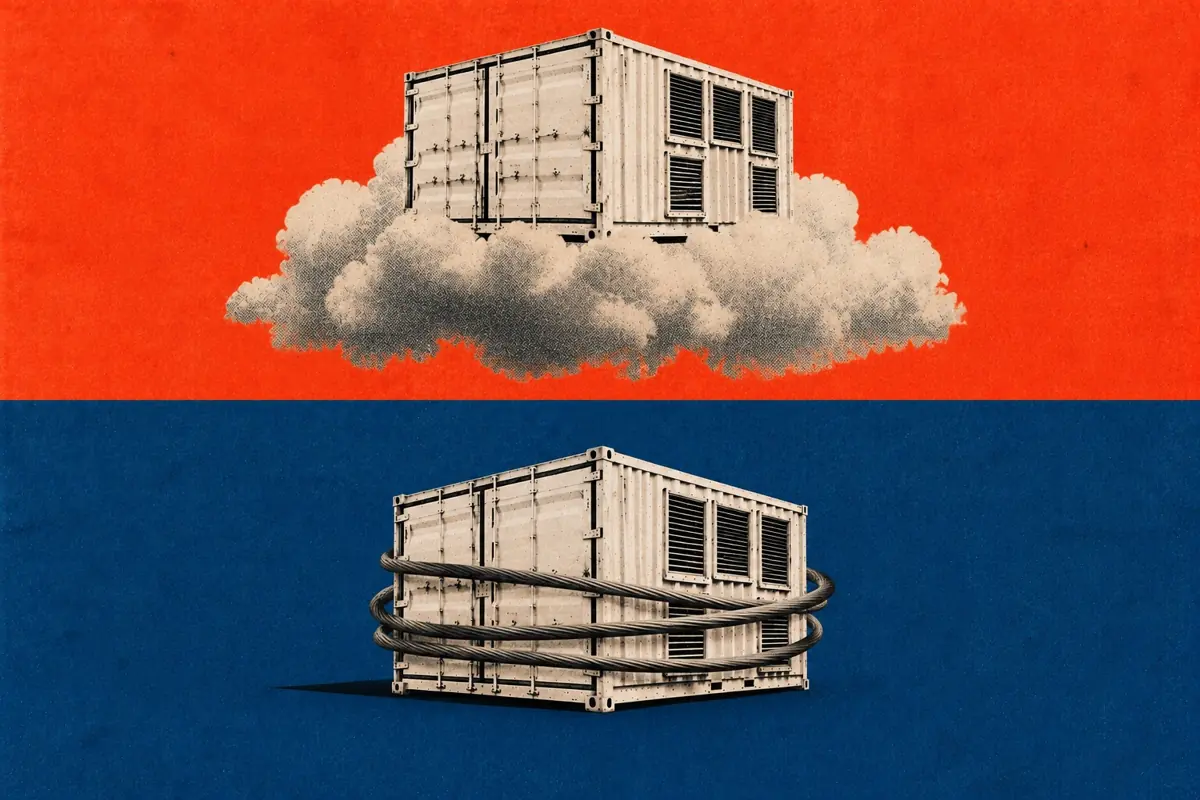
A load that offsets its Resource Adequacy Impact with co-located or contracted new supply (a Partner Resource) earns Firm Withdrawal Service. Firm service is the right to draw power in all but emergencies. A load that leaves an impact unresolved takes curtailable non-firm service on that portion of its demand. NYISO drafted the proposal in response to FERC's June 2026 Show Cause Order and will file it by November 16, 2026.
In NYISO's examples, the same 1,000 MW load is 600 MW firm if it adds nothing. A network upgrade lifts it to 700 MW firm, and a Partner Resource makes it fully firm.
Key takeaways
- New commercial or industrial loads of 50 MW or more enter BELL. Existing sites enter when their load grows by 50 MW or more.
- A load with a Resource Adequacy Impact above 25 MW gets non-firm service on the impactful MW. Co-located or Partner Resources can offset the impact.
- A 500 MW pairing pays $4.8 million to enter BELL, and 89% of this allocates to the generator's Cluster Study.
- Queued projects face a transition test. Group A grandfathers by meeting six deadlines, and Group B enters the transitional BELL-0 by meeting five. NYISO would withdraw the rest.
Each large load completes two 90-day studies and one 12-month assessment
To interconnect, each cohort completes a 90-day Resource Adequacy and Modeling Period (RAMP), then a 90-day System Impact Study (SIS). The RAMP determines the load's Resource Adequacy Impact. These study windows open twice a year, and a validated request joins the next available cohort. Both cohorts then elect into a single 12-month Assessment of Load Integration (ALI), where NYISO finalizes firm and non-firm allotments and any network upgrades.
Sign up to read this article for free
Unlimited access to our free articles
Monthly access to 2 Global Research articles
Benchmarks, Forecasts, Ko and more