Dans les coulisses des Summer Sessions '26
Jeudi dernier, plus de 800 professionnels de l’industrie des batteries et des énergies renouvelables se sont réunis au Protein Studios de Shoreditch pour la première édition des Summer Sessions de Modo Energy. Près du double avait postulé pour y assister.
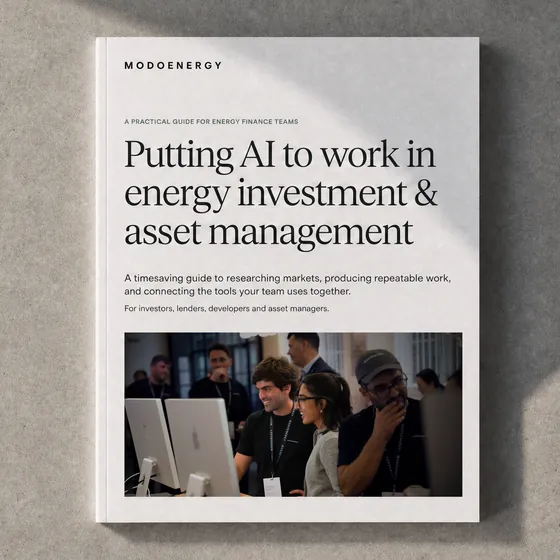 Guide gratuit de Modo EnergyMettre l’IA au service de l’investissement énergétique et de la gestion d’actifsTransformer ce type d’analyse de marché en processus reproductible ? Un guide pratique pour utiliser les outils d’IA au sein de vos équipes d’investissement et d’exploitation, avec des conseils concrets et des astuces pour gagner du temps, applicables dès maintenant.Télécharger le guide →
Tout au long de l’après-midi, neuf intervenants ont livré leur analyse honnête sur l’évolution du marché. Cliquez sur un nom pour accéder à leurs slides, ou sur le titre d’une intervention pour voir la vidéo complète :
- Michael Liebreich (Liebreich Associates) — la transition mondiale, en accéléré
- Robyn Lucas (Modo Energy) — Le paradoxe des batteries au Royaume-Uni : découplage du gaz, compression des revenus
- Stuart Jackson (Octopus Energy) & Quentin Scrimshire (Modo Energy) — discussion informelle sur le passage à l’échelle
- Till Stehr (Modo Energy) — de l’engorgement au gigawatt : le boom du stockage en Allemagne ?
- Amit Gudka (Field) — retours d’expérience sur la création d’une entreprise de stockage intégrée verticalement
- Rimshah Javed (Danske Commodities) — le tolling, vu par un offtaker
- Dr. Kai-Philipp Kairies (ACCURE) — tirer parti de la précision du niveau de charge pour 5% de revenus en plus
- Ed Porter (Modo Energy) — l’avenir des marchés de l’électricité
- Quentin Scrimshire (Modo Energy) — la fin de l’ère du conseil
L’après-midi s’est déroulée en session unique — huit conférences et une discussion informelle, puis une soirée réunissant une grande partie du secteur européen du stockage. Un Ko Bar a permis aux participants de poser leurs propres questions à l’analyste IA de Modo Energy. Chaque intervenant a été interrogé sur un point : où va réellement le marché ?
Voici leurs réponses.

1. Une transition en accéléré
Le monde connaît son deuxième choc pétrolier en quatre ans, et pour la première fois il s’appuie sur de nouvelles technologies plutôt que sur les anciennes. Michael Liebreich, fondateur de New Energy Finance et investisseur précoce chez Modo Energy, a qualifié cela de Grande Accélération de l’Énergie Propre, avec une seconde vague déjà en route.

Les chiffres de la construction en témoignent. Environ 90% des nouvelles capacités raccordées aux réseaux mondiaux sont aujourd’hui éoliennes ou solaires, chacune produisant plus d’électricité que le nucléaire. Selon lui, les batteries atteignent aujourd’hui le point d’inflexion qu’avaient connu l’éolien et le solaire vers 2015. Il précise cependant que la Chine domine toute la chaîne des technologies propres. Et malgré les demandes pour 400 GW de data centers IA au Texas, Liebreich estime qu’ils ne verront probablement pas le jour pour la plupart.
"La domination chinoise ne concerne pas seulement le solaire et les batteries, ni seulement les minerais critiques, mais l’ensemble de la chaîne de valeur de l’énergie propre."
- Michael Liebreich, Liebreich Associates
2. Royaume-Uni : le gaz se découple
Pour la première fois, les prix de l’électricité au Royaume-Uni se détachent de ceux du gaz. En 2026, l’éolien et le solaire fixeront le prix moyen lors de 20% des journées — à un niveau inférieur. Mais cela a un coût pour le stockage sur batteries, c’est le paradoxe du marché britannique. Robyn Lucas, responsable GB chez Modo Energy, nous l’explique :

Les batteries s’auto-cannibalisent. Plus elles sont nombreuses sur le réseau, plus les écarts de prix de l’électricité s’atténuent. Le Royaume-Uni comptait 1,3 GW de BESS en février 2022 ; en 2026, il en compte plus de 7 GW. Ce parc de stockage a remplacé les centrales à gaz de pointe coûteuses et permis d’économiser 188 millions de livres pour les consommateurs depuis décembre 2024. Une batterie deux heures a généré en moyenne environ 68 000 £/MW/an sur l’indice 2h de Modo Energy sur les 18 derniers mois. Ces revenus restent volatils, d’où la maturation du marché, qui passe des prix planchers à des contrats de tolling et des swaps.
Retrouvez les slides de Robyn ici.
"Nous découplons les prix de l’électricité du gaz — et ces jours-là, ce sont l’éolien et le solaire qui fixent le prix. Et c’est moins cher."
- Robyn Lucas, Modo Energy
3. Les 80 premiers % de la transition énergétique sont faciles
Ed Porter, Directeur EMEA & APAC chez Modo Energy, a pris de la hauteur. Le solaire bon marché (les prix en Espagne tombent désormais à 0 €/MWh pendant six à sept heures par jour) et les batteries qui offrent de la flexibilité à meilleur coût que le gaz permettent déjà d’éliminer environ 80% du gaz du système.

La vraie difficulté, c’est les 20% restants : la « Dunkelflaute », cette quinzaine sans vent ni soleil qui survient tous les cinq ans. Les batteries couvrent le pic de puissance, mais ne peuvent pas combler un déficit énergétique de 10 à 15 térawattheures. Selon Porter, il n’est pas forcément pertinent de viser ces 20% finaux : c’est très coûteux, et le système électrique pourrait avoir plus d’impact en accélérant l’électrification des autres secteurs.
Retrouvez les slides d’Ed ici.
"Doit-on vraiment chasser les dernières tonnes d’émissions du secteur électrique, ou laisser ce secteur accélérer la transition des autres ?"
- Ed Porter, Modo Energy
4. Allemagne : tous les ingrédients, mais il manque les batteries
L’Allemagne devrait être en plein boom. Ce n’est pas le cas. Elle dispose de 120 GW de solaire, soit cinq fois plus que le Royaume-Uni, et d’un système tellement en manque de flexibilité que le 1er mai, le prix day-ahead a failli ne pas être fixé à -500 €/MWh, avant de grimper à 846 €/MWh le soir même. Pourtant, le pays ne compte que 3 GW de stockage à l’échelle du réseau, là où le Royaume-Uni en était il y a sept ans.

Le diagnostic de Till Stehr : l’incertitude. Des années de débats réglementaires, des conditions de raccordement restrictives, et une décennie à réguler pour une économie de l’hydrogène encore embryonnaire. Mais la situation s’améliore : des tarifs dynamiques pourraient rémunérer les batteries pour se charger dans les régions saturées de solaire, et la modélisation de Modo Energy prévoit un TRI de 14% pour un actif mis en service en 2030, en tenant compte des dernières évolutions réglementaires.
Retrouvez les slides de Till ici.
"Il faut passer de trois à soixante gigawatts. Il ne reste plus qu’à construire 57 GW de batteries."
- Till Stehr, Modo Energy
5. Construire ou acheter : quelle part de la chaîne de valeur posséder ?
Deux opérateurs ont répondu de façon opposée à la même question. Stuart Jackson, CFO et cofondateur d’Octopus Energy (présent dans 25 pays, 12 millions de clients, 8 milliards de dollars d’investissements), déconseille de posséder la production. La stabilité peut s’acheter de façon synthétique et contractuelle, il n’est donc pas nécessaire d’immobiliser du capital.
"Je ne suis pas convaincu qu’il faille être propriétaire. On peut pratiquement tout faire de manière synthétique et contractuelle."
- Stuart Jackson, Octopus Energy

Amit Gudka, CEO et fondateur de Field, a choisi l’intégration verticale : développement, construction, exploitation et optimisation en interne sur quatre marchés, pour capter les boucles de rétroaction entre chaque maillon. Sa leçon : privilégier la conviction à la conformité. Quand un marché devient évident, il est déjà trop tard.

"Si vous attendez qu’un marché soit évident pour vous y lancer, il est souvent trop tard. Il faut oser se lancer un peu tôt, quitte à être inconfortable."
- Amit Gudka, Field
Posséder ou contractualiser, construire ou acheter : deux stratégies crédibles et opposées pour un même marché, preuve qu’aucune réponse définitive n’existe pour l’instant.
6. Les risques non pris en compte dans les prix
Rimshah Javed, senior originator chez Danske Commodities, a partagé la vision d’un offtaker sur le tolling. Les contrats qui échouent le font souvent à cause de risques non évalués au départ ; la solution passe par des incitations bien structurées plutôt que par de simples pénalités, sur des contrats pouvant durer 10 à 15 ans.
"Un tolling prend un an à négocier, et une seule journée pour mal tourner."
- Rimshah Javed, Danske Commodities

Dr. Kai-Philipp Kairies, CEO d’ACCURE Battery Intelligence, est allé voir ce qui se passe à l’intérieur de la batterie. La plupart des interventions considéraient la batterie comme un simple conteneur d’électrons. Lui s’est demandé ce qui se passe réellement côté DC, et la réponse a dérangé : les batteries se trompent régulièrement de 10% sur leur niveau de charge (cellules LFP), ce qui grignote discrètement les revenus.
"Obtenir 5% de rendement en plus sur le même actif, c’est comme avoir surpayé de 5% à l’achat — et ça peut coûter cher à une équipe achats."
- Dr. Kai-Philipp Kairies, ACCURE Battery Intelligence

7. La fin de l’ère du conseil
Quentin Scrimshire a conclu la journée sur une conviction : depuis vingt ans, le secteur fonctionne avec des cabinets de conseil — modèles boîte noire, cycles longs, honoraires élevés. Modo Energy a automatisé et standardisé ce travail, mais cela n’a fait qu’améliorer le modèle, sans le remplacer. Selon lui, ce modèle touche à sa fin. La prochaine étape : l’ère de l’analyse énergétique pilotée par l’IA.

Les analystes passent 80% de leur temps à collecter des chiffres et refaire des présentations, et seulement 20% à l’analyse qui fait la différence. Ko inverse cette logique : il prend une tâche, la planifie, lance la prévision, vérifie son propre travail et livre un résultat que l’analyste peut interroger. Trois mois après son lancement, un quart des 30 000 utilisateurs du Terminal de Modo Energy utilisent Ko chaque semaine, et un cinquième chaque jour. En interne, les analystes passent désormais plus de la moitié de leur temps à le former. Pour finir, Scrimshire a levé toutes les limites d’utilisation de Ko pour tous les clients payants pendant un mois.
Téléchargez les slides de Quentin ici.
"L’ère du conseil est terminée. Pour nous, mais aussi pour le marché — car la technologie nous permet d’en faire bien plus pour nos clients."
- Quentin Scrimshire, Modo Energy
Ce que la journée a révélé
Le signal le plus clair était la composition de la salle : développeurs, optimiseurs, traders, investisseurs, banques, utilities et contreparties — la quasi-totalité du marché européen du stockage réunie le temps d’un après-midi.

C’est le fil rouge des interventions et de Ko lui-même. À mesure que le marché se structure, l’avantage passe de la collecte de données à la capacité d’agir vite. Près de deux fois plus de personnes ont voulu participer que la salle ne pouvait en accueillir, ce qui laisse présager une deuxième édition des Summer Sessions.